Overview
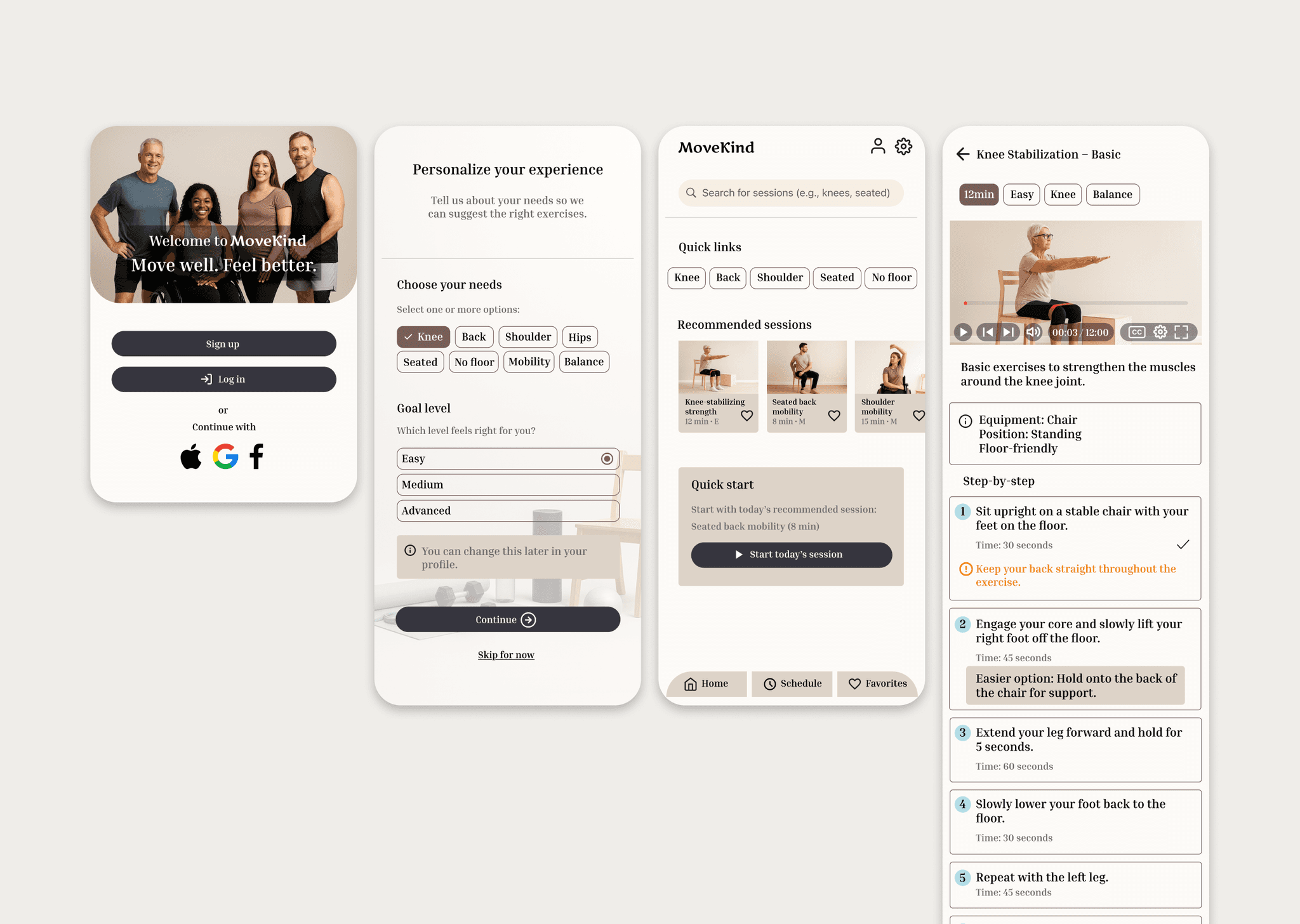
MoveKind is a browser-based workout and rehabilitation platform for short, accessible training sessions. We designed each step to make exercises easy to find, understand and follow at an individual pace.
The main challenge was to design a system that supports accessibility while maintaining a clean and modern interface. Many existing platforms lack clear guidance, proper structure, and accessible interaction patterns, making it difficult for users to follow exercises or complete actions efficiently.
Through research, usability testing, and accessibility analysis, we identified key pain points such as unclear navigation, low contrast, and lack of structured guidance during workouts. These insights guided the redesign process and helped us focus on clarity, usability, and accessibility.
Process & Solution
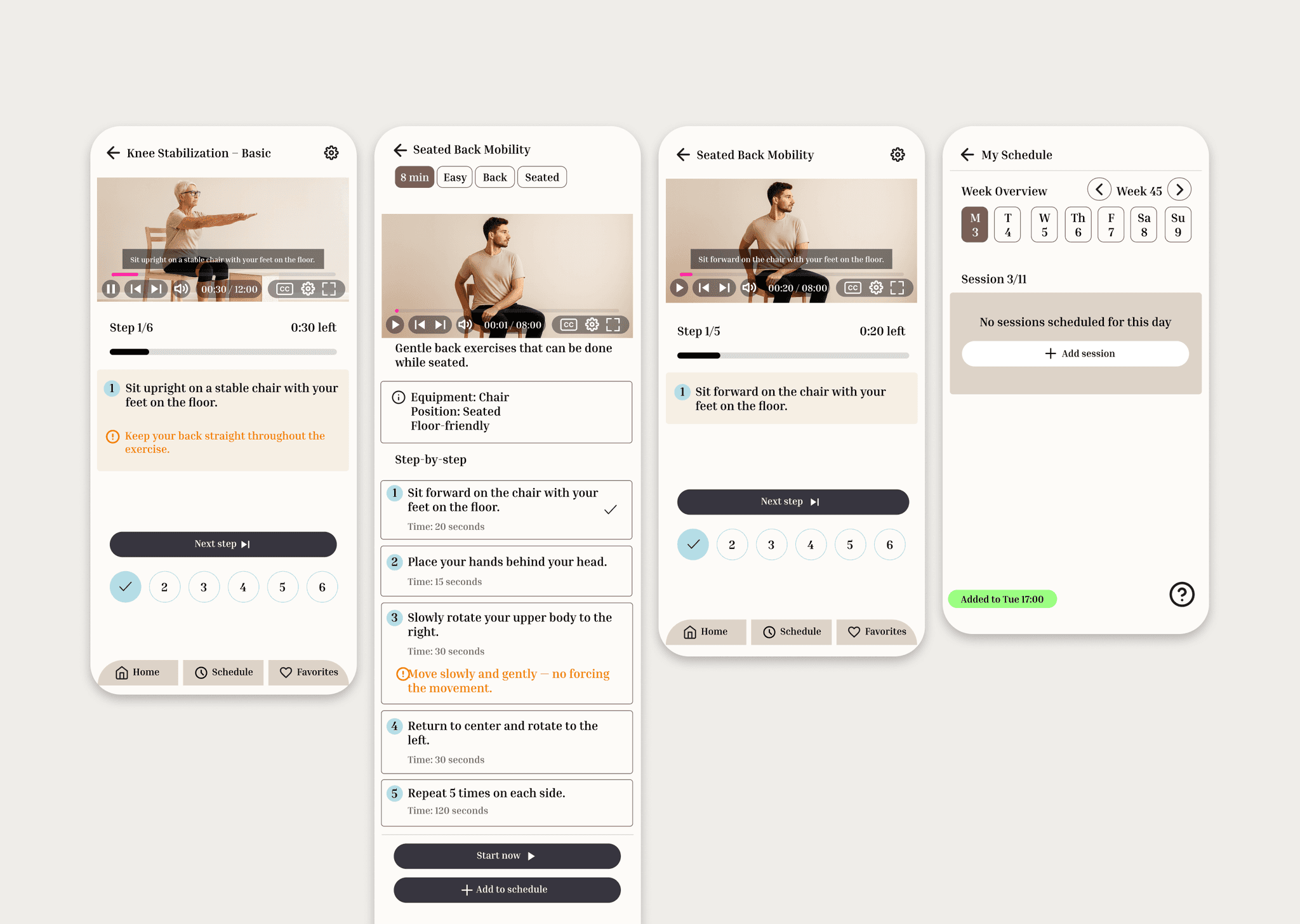
The project followed an iterative design and development process, starting with defining the core user flow and building a minimum viable product. We designed key flows such as browsing workouts, viewing details, and completing guided exercise sessions.
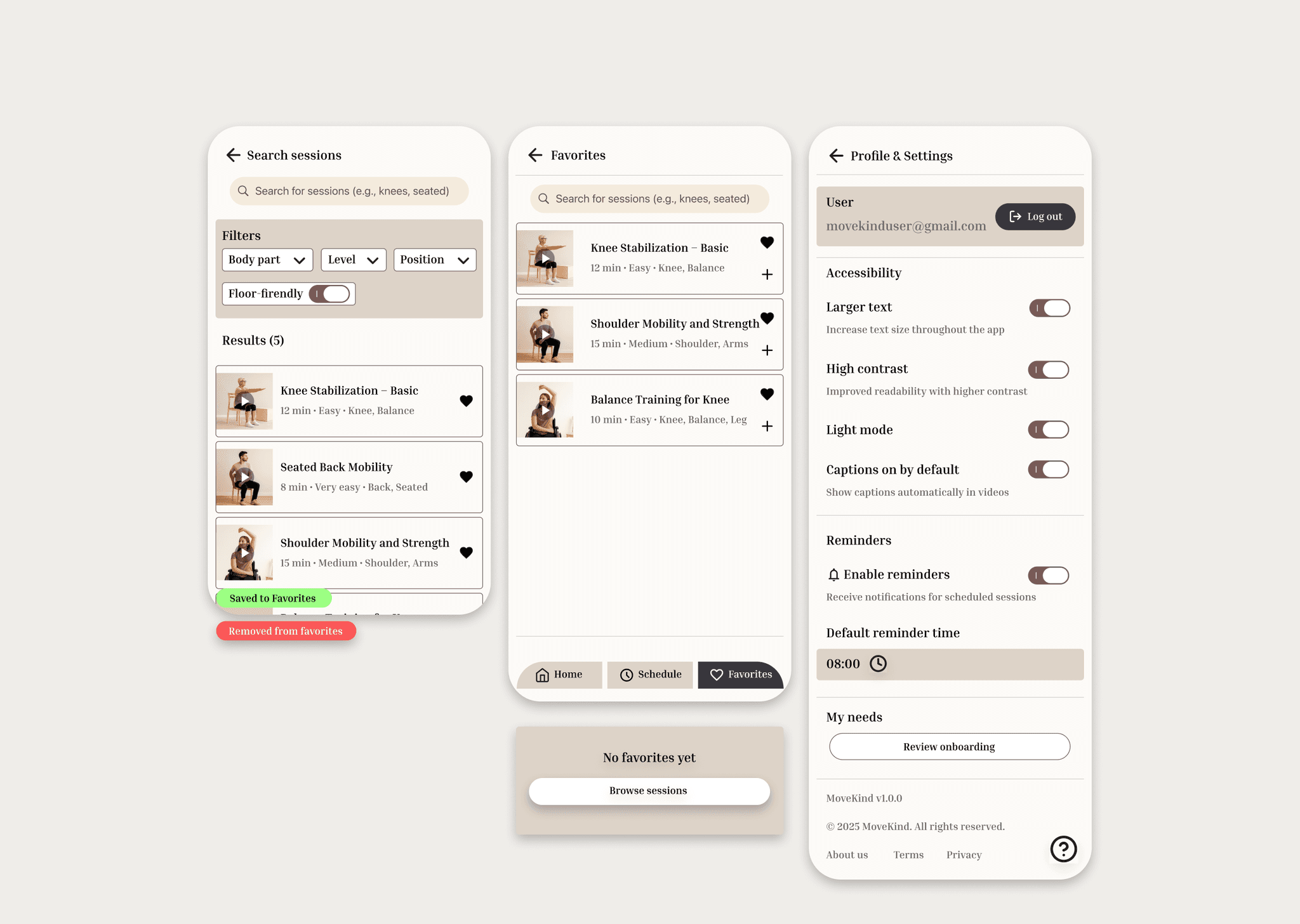
A strong focus was placed on accessibility (WCAG). The interface was structured with semantic HTML, clear heading hierarchy, and keyboard navigation support. We also implemented synchronized instruction overlays for videos, allowing users to follow exercises step by step with visual and textual guidance.
The user flow was simplified from browsing to checkout, reducing cognitive load and improving clarity. Key improvements included a cleaner category structure, better visual hierarchy, improved contrast, and clear call-to-action elements.
Tech Stack
React + Next.js 14 (App Router) for modern frontend architecture and performance
TypeScript for type safety and scalability
Umbraco 17 (Headless CMS) for content management
Docker & Docker Compose for reproducible environments and deployment
Impact
Improved navigation and category structure
Better accessibility through WCAG-aligned design
Reduced cognitive load with clearer UI hierarchy
Streamlined user flow from browsing to completion
Enhanced usability with step-by-step guided interactions
This project showed how accessibility decisions, content structure and frontend architecture need to work together from the start.